

Gate valves are one of the most commonly used shut-off valves in fire protection systems, water pipelines, and industrial applications. Their simple structure and reliable sealing performance make them essential in situations where full flow or complete shut-off is required. However, in real-world operation-especially during emergencies-many people still hesitate or make mistakes when trying to close a valve. A clear understanding of the correct turning direction and operating method is critical for both safety and system reliability.
Which Direction Closes a Gate Valve?
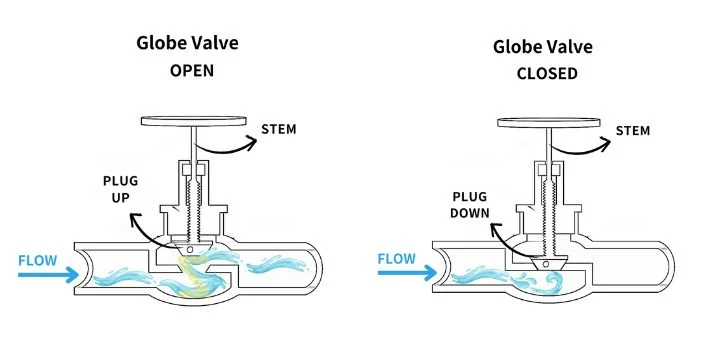
In standard practice, almost all gate valves follow a universal operating rule: turning the handwheel clockwise will close the valve, while turning it counterclockwise will open it. This convention is widely adopted across industries and aligns with the general mechanical principle often described as "righty-tighty, lefty-loosey." When the valve is turned clockwise, the internal gate moves downward along the stem, gradually sealing against the valve seat until the flow is completely stopped.
Although this rule applies to the vast majority of valves, it is still important to check for direction indicators or markings on the valve body, especially in specialized systems or older installations. In fire protection scenarios, correct operation is particularly important because any delay or incorrect action can directly affect emergency response efficiency.
Understanding How a Gate Valve Works
A gate valve controls flow through the vertical movement of a flat or wedge-shaped disc inside the valve body. When the valve is fully open, the gate is lifted entirely out of the flow path, allowing fluid to pass through with minimal resistance and almost no pressure drop. This is why gate valves are preferred in systems that require unobstructed flow, such as fire sprinkler supply lines or hydrant networks.
When closing the valve, rotating the handwheel drives the stem downward, lowering the gate until it tightly seals against the seating surfaces. This creates a reliable shut-off, preventing any fluid from passing through. Depending on the design, the valve may use a rising stem, where the stem visibly moves up and down, or a non-rising stem, where the movement occurs internally. Despite these structural differences, the closing direction remains consistent.
Proper Operation in Real Applications
In practical use, operating a gate valve is not just about turning it in the correct direction, but also about doing so properly. The valve should be turned slowly and steadily to avoid sudden pressure changes in the system. Rapid closing can cause water hammer, a pressure surge that may damage pipes, fittings, or other components in the system.
It is also important not to apply excessive force when the valve reaches its fully closed position. Once the gate is seated, additional tightening does not improve sealing performance and may instead damage internal components such as the stem or seat. Similarly, gate valves should not be used for throttling or flow regulation. Keeping them partially open can lead to vibration, erosion, and long-term wear, reducing their service life.
Routine inspection and maintenance are equally important. Over time, corrosion, debris, or lack of operation can cause the valve to become stiff or stuck. Regularly cycling the valve between open and closed positions helps ensure it remains functional, especially in fire protection systems where reliability is critical.
Importance in Fire Protection Systems
Gate valves play a key role in fire protection infrastructure, including sprinkler systems, fire pumps, and hydrant networks. They are often used as isolation valves to control water supply to specific zones or equipment. Standards developed by the National Fire Protection Association emphasize proper installation, accessibility, and operation of these valves to ensure that fire protection systems perform effectively during emergencies.
In such environments, knowing the correct direction to close a valve is not just a matter of convenience-it can directly impact response time and overall system performance. Whether isolating a damaged section of piping or controlling water flow during maintenance, proper valve operation helps maintain system integrity and safety.
Conclusion
Understanding how to properly operate a gate valve is a fundamental but essential skill in fire protection and industrial systems. The key takeaway is simple: turn clockwise to close and counterclockwise to open. While the principle is straightforward, correct handling, careful operation, and regular maintenance are what ensure long-term reliability. In critical systems such as fire protection, even small operational details can make a significant difference when it matters most.
About NONFIR
NONFIR specializes in manufacturing high-quality, certified fire protection products, including gate valves, fire sprinkler systems, and related components designed for global safety standards and demanding environments.
🌐 Website: www.nonfirsprinkler.com
📧 Email: info@nfsprinkler.com
📱 WhatsApp: +86 18160950625
For product details, technical support, or project inquiries, feel free to contact us anytime.


