API 600 and API 608 define performance requirements for two of the most common industrial valve types. While both control fluid flow, choosing a gate valve instead of a ball valve is often the better solution for specific applications-especially in fire protection, water supply, and large-diameter pipelines.
Understanding the Difference Between Gate Valves and Ball Valves
Gate Valve Working Principle
A gate valve uses a sliding gate (wedge or parallel disc) that moves vertically to start or stop flow. It is designed primarily for fully open or fully closed service.
Ball Valve Working Principle
A ball valve uses a rotating ball with a bore through the center. A 90-degree turn quickly opens or closes the valve.
When a Gate Valve Is the Better Choice
1. Large-Diameter Pipelines
Gate valves are preferred for large pipe sizes (DN50 and above) because:
Lower cost per diameter in bigger sizes
Better suitability for buried or underground systems
Common in municipal and fire water networks
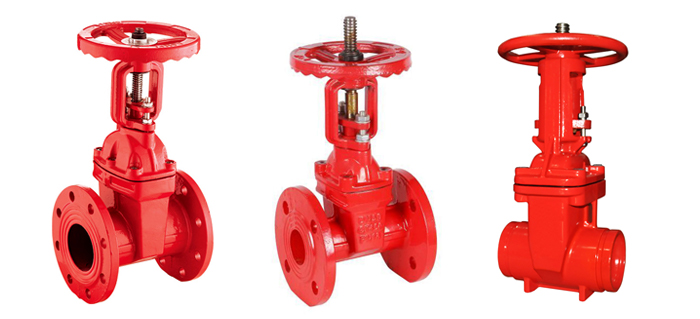
They are widely used in hydrant lines, sprinkler systems, and pump discharge pipelines.
2. Minimal Pressure Drop
When fully open, a gate valve provides a straight-through flow path with very low resistance.
This makes it ideal for:
Fire protection systems
Water transmission mains
Applications requiring maximum flow capacity
Ball valves also offer low resistance, but in very large systems, gate valves are often more economical.
3. Better for High-Temperature Applications
Gate valves typically perform better in:
High-temperature systems
Steam lines
Industrial process pipelines
Their design handles thermal expansion more effectively than soft-seated ball valves.
4. Cost Efficiency in Large Installations
For large infrastructure projects:
Gate valves are often more budget-friendly
Replacement parts are widely available
Long service life in on/off applications
Municipal water systems frequently select gate valves for this reason.
5. Industry Standard in Fire Protection
In fire protection systems, gate valves are commonly used because:
They are reliable in rarely operated systems
They remain stable in fully open positions
They comply with fire system design practices
They are widely installed in hydrant branches, sprinkler risers, and fire pump connections.
When Ball Valves May Be Better
To balance the comparison:
Ball valves are preferred when:
Fast shut-off is required
Frequent operation is needed
Compact installation space is limited
They are ideal for smaller diameter piping and quick isolation points.


Gate Valve vs Ball Valve: Quick Comparison
| Feature | Gate Valve | Ball Valve |
|---|---|---|
| Operation | Multi-turn | Quarter-turn |
| Best For | Large pipelines | Quick shutoff |
| Cost (Large Sizes) | More economical | Higher |
| Flow Restriction | Very low | Very low |
| Throttling | Not recommended | Limited use |
Final Thoughts
Choosing between a gate valve and a ball valve depends on system requirements. If your application involves large-diameter pipelines, minimal pressure loss, high temperature, or fire protection systems, a gate valve is often the better long-term solution.
For reliable fire protection valves and pipeline equipment, contact:
NONFIR
🌐 Website: www.nonfirsprinkler.com
📧 Email: info@nfsprinkler.com
📱 WhatsApp: +86 18160950625