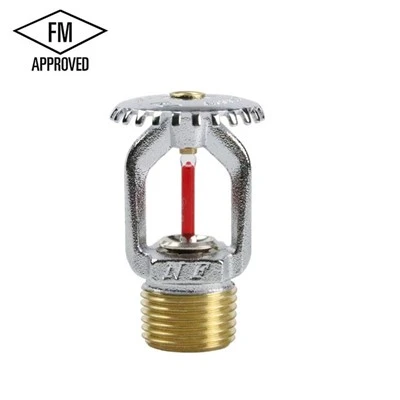
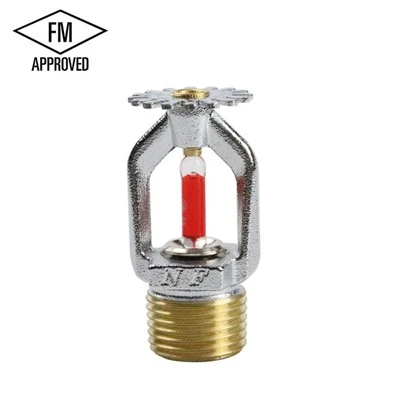
Cold storage warehouses present some of the most difficult challenges in modern fire protection engineering. Extremely low temperatures, ice formation, condensation, and high-piled storage all increase the complexity of sprinkler system design. Traditional wet pipe systems cannot operate effectively in freezing environments, making dry sprinkler solutions essential for freezer warehouses and cold chain logistics facilities.
Among modern fire protection technologies, ESFR dry sprinklers are becoming increasingly popular for cold storage applications because they combine fast-response suppression performance with freeze protection reliability.
This article explains how ESFR dry sprinklers work, their advantages, common applications, and why they are becoming a preferred solution for modern cold storage fire protection systems.

What Is an ESFR Dry Sprinkler?
ESFR stands for Early Suppression Fast Response. ESFR dry sprinklers are specialized sprinkler heads designed for freezing environments where standard wet sprinklers cannot be used safely.
Unlike conventional wet sprinklers, dry sprinklers contain:
A sealed internal waterway
Extended inlet tube construction
Air-filled barrel sections
Freeze-resistant design
Water remains behind the heated area until sprinkler activation occurs. Once the thermal element operates, water flows immediately through the sprinkler and suppresses the fire.
Why Cold Storage Facilities Need Dry Sprinklers
Cold storage warehouses often operate at temperatures below 0°C or even below -20°C.
In these environments:
Water inside exposed piping can freeze
Ice expansion may damage pipes
Sprinkler operation may fail
Pipe rupture risks increase significantly
Dry sprinkler systems help prevent freezing while maintaining reliable fire protection performance.
Common cold storage applications include:
Food distribution centers
Frozen product warehouses
Pharmaceutical storage
Meat processing facilities
Refrigerated logistics centers
Advantages of ESFR Dry Sprinklers
1. Fast Fire Suppression
ESFR dry sprinklers are designed to suppress fires rapidly during the early growth stage.
Their high water discharge density helps:
Control fire spread quickly
Reduce heat release
Minimize property damage
Improve occupant safety
Fast suppression is especially important in warehouses storing plastic packaging and palletized commodities.
2. Freeze Protection Reliability
The dry barrel structure prevents standing water from freezing inside the sprinkler assembly.
This greatly reduces:
Pipe rupture risks
Ice blockage problems
Maintenance issues
Winter system failures
Reliable freeze protection is essential for long-term cold storage operation.
3. Reduced Need for In-Rack Sprinklers
In many storage configurations, ESFR systems can eliminate the need for complex in-rack sprinkler installations.
Benefits include:
Simplified piping layout
Lower installation costs
Easier maintenance
Reduced rack obstruction
This advantage is highly valuable in automated storage facilities.
4. Suitable for High-Ceiling Warehouses
Modern cold storage warehouses are becoming taller to improve storage efficiency.
ESFR dry sprinklers are commonly used in:
High-piled storage
Tall freezer warehouses
Automated rack systems
Large distribution centers
Their suppression capability makes them suitable for demanding warehouse environments.
Common Challenges in Cold Storage Fire Protection
Cold storage facilities create unique fire protection difficulties that require specialized engineering.
Ice Formation
Condensation may freeze around sprinkler components and piping.
Thermal Shock
Sudden temperature differences can damage system components.
Pipe Corrosion
Dry and pre-action systems often experience internal corrosion due to trapped moisture and oxygen.
Difficult Maintenance Access
Tall storage racks and freezer conditions make inspection and maintenance more complicated.
Proper system design is critical for reliable long-term performance.
ESFR Dry Sprinklers vs Standard Dry Sprinklers
| Feature | ESFR Dry Sprinkler | Standard Dry Sprinkler |
|---|---|---|
| Fire Strategy | Early suppression | Fire control |
| Response Speed | Fast response | Standard response |
| Water Discharge | High density | Moderate |
| High-Piled Storage | Excellent | Limited |
| Cold Storage Use | Excellent | Good |
| Plastic Commodity Protection | Strong | Moderate |
ESFR dry sprinklers provide superior suppression performance for modern storage hazards.
Important Design Considerations
Ceiling Height
Warehouse ceiling height directly affects sprinkler spacing and discharge requirements.
Commodity Classification
Plastic products, cartons, and palletized storage create different fire hazards.
Airflow Management
Cold storage ventilation systems may influence sprinkler spray patterns.
Hydraulic Calculations
ESFR systems require sufficient water pressure and flow capacity.
Proper engineering design ensures compliance with applicable fire protection standards.
Corrosion Prevention in Dry Systems
Corrosion remains a major concern for dry and pre-action sprinkler systems.
Many facilities now use:
Nitrogen inerting systems
Corrosion-resistant materials
Internal pipe inspections
Water quality management
Nitrogen-based anti-corrosion systems are increasingly popular in freezer warehouse applications.
Future Trends in Cold Storage Fire Protection
The global cold chain logistics market continues expanding rapidly due to:
E-commerce growth
Frozen food demand
Pharmaceutical distribution
International supply chain development
As a result, demand for advanced fire protection solutions is increasing worldwide.
Future industry trends include:
Larger K-factor ESFR sprinklers
Smart monitoring technology
Improved anti-corrosion systems
Enhanced cold storage suppression methods
Modern cold storage facilities require fire protection systems that are both reliable and efficient.
Conclusion
ESFR dry sprinklers are becoming one of the most effective fire protection solutions for modern cold storage warehouses and freezer facilities. Their combination of fast-response suppression performance and freeze protection reliability makes them highly suitable for demanding storage environments.
As warehouse heights increase and storage risks become more complex, advanced ESFR dry sprinkler systems will continue playing a critical role in modern industrial fire protection engineering.