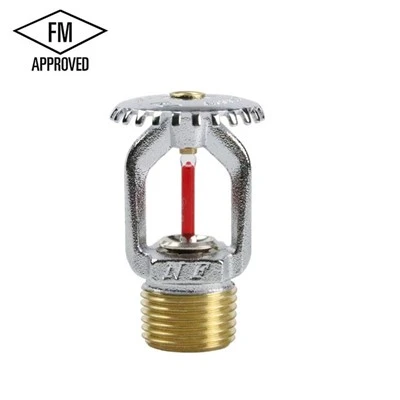
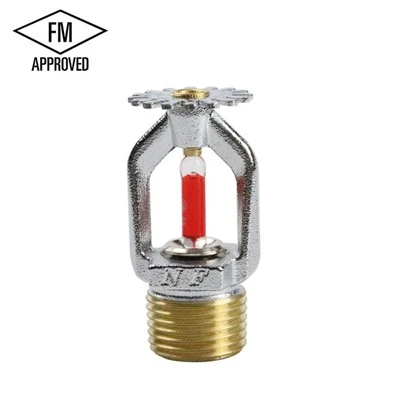
Choosing the right fire sprinkler system is an important part of fire protection planning. Two of the most common automatic sprinkler systems are wet pipe and dry pipe sprinkler systems.
Both systems use automatic fire sprinklers to control fires, but they operate differently. The main difference is what is stored inside the sprinkler piping under normal conditions.
A wet pipe system contains water, while a dry pipe system contains pressurized air or nitrogen. Understanding this difference can help engineers, contractors, and building owners select the right system for a specific application.

What Is a Wet Pipe Sprinkler System?
A wet pipe sprinkler system is a fire protection system in which the sprinkler piping is continuously filled with pressurized water.
When a fire causes the temperature around a sprinkler to reach its rated activation temperature, the sprinkler opens. Because water is already present in the piping, it can immediately flow through the activated sprinkler.
Wet pipe systems are commonly used in:
Office buildings / Hotels / Shopping centers / Schools / Hospitals / Heated warehouses / Commercial and industrial buildings
The main advantage of a wet pipe system is its relatively simple design and fast water delivery.
However, because the piping contains water, the system is generally not suitable for areas where the temperature may fall below freezing unless appropriate measures are taken.
What Is a Dry Pipe Sprinkler System?
A dry pipe sprinkler system is designed for areas where freezing temperatures may be a concern.
Instead of water, the sprinkler piping is normally filled with pressurized air or nitrogen. A dry pipe alarm valve separates the water supply from the sprinkler piping.
When a sprinkler activates due to heat, air or nitrogen escapes from the piping. The pressure decreases, causing the dry pipe valve to open. Water then enters the piping and flows toward the activated sprinkler.
Dry pipe systems are commonly considered for:
Unheated warehouses / Parking garages / Loading docks / Unheated industrial areas / Cold climates
Other spaces exposed to freezing temperatures
The main advantage is that water is not normally stored inside the sprinkler piping, reducing the risk of frozen pipes.

Dry Pipe vs. Wet Pipe: Key Differences
| Feature | Wet Pipe System | Dry Pipe System |
|---|---|---|
| Piping condition | Filled with water | Filled with air or nitrogen |
| Freezing risk | Higher | Lower |
| Water delivery | Faster | Slightly delayed |
| System complexity | Lower | Higher |
| Maintenance | Generally simpler | More involved |
| Typical application | Heated buildings | Unheated or freezing-risk areas |
The choice between the two systems should be based on the conditions of the protected area rather than simply on the building type.
When Should You Choose a Wet Pipe System?
A wet pipe sprinkler system is generally a good choice when the protected space can be reliably maintained above freezing.
It is particularly suitable when:
The area is heated.
If the sprinkler piping is located inside a temperature-controlled building, there may be little reason to use a dry pipe configuration.
Fast water delivery is important.
Because the piping is already filled with water, the system can discharge water through an activated sprinkler without waiting for the piping to fill.
A simpler system is preferred.
Wet pipe systems generally require fewer specialized components and are relatively straightforward to inspect and maintain.
When Should You Choose a Dry Pipe System?
A dry pipe sprinkler system should be considered when sprinkler piping may be exposed to freezing conditions.
For example, an unheated warehouse may require fire protection while temperatures can fall below the freezing point. A dry system can provide automatic sprinkler protection without normally keeping water inside the exposed piping.
Dry pipe systems can also be suitable for parking garages, loading areas, and other partially enclosed spaces.
However, dry pipe systems are more complex and require additional components such as a dry pipe valve and an air or nitrogen supply system.
How Does Sprinkler Selection Affect Both Systems?
Although wet and dry pipe systems operate differently, both rely on properly selected automatic fire sprinklers.
Important sprinkler characteristics include:
K-factor
Temperature rating
Response type
Installation orientation
Coverage requirements
Hazard classification
For example, K5.6, K8.0, and K11.2 sprinklers may be selected for different hydraulic and application requirements. Upright, pendent, and sidewall sprinklers are also designed for different installation conditions.
For dry pipe applications, sprinkler selection should also consider the system configuration and project requirements.
The sprinkler is only one part of the complete fire protection system, so compatibility between the sprinkler, piping, valves, and water supply is essential.


Which System Is Right for Your Project?
A simple selection guide is:
Choose a wet pipe sprinkler system when:
The protected area is maintained above freezing.
Water can safely remain inside the piping.
Fast water delivery is a priority.
A simpler system is preferred.
Consider a dry pipe sprinkler system when:
Freezing temperatures are possible.
The area is unheated.
Sprinkler piping is exposed to cold conditions.
The project includes parking garages, loading docks, or unheated storage areas.
For larger or more complex projects, system selection should be based on the actual environmental conditions, fire hazards, hydraulic requirements, and applicable fire protection standards.
Conclusion
Wet pipe and dry pipe sprinkler systems both provide reliable automatic fire protection, but they are designed for different environmental conditions.
A wet pipe sprinkler system is generally suitable for heated buildings where freezing is not a concern. It offers a simple configuration and fast water delivery.
A dry pipe sprinkler system is better suited to areas where freezing temperatures could damage water-filled sprinkler piping. Although it requires additional components and has a slightly longer water delivery sequence, it provides an effective solution for unheated and cold environments.
Selecting the right sprinkler system is only the first step. Proper selection of fire sprinklers, K-factors, temperature ratings, installation types, and system components is also essential for reliable fire protection.
NONFIR provides automatic fire sprinklers in different K-factors, orientations, and response characteristics for a range of fire protection applications. Product selection should be based on the specific requirements of each project and applicable standards.