Warehouse fire protection is becoming increasingly important as storage facilities grow larger, taller, and more automated. Changes in warehouse design, storage density, and material handling are creating new challenges for fire protection systems. In 2026, the industry is placing greater emphasis on reliable sprinkler protection, appropriate system design, and certified fire protection equipment.
Higher Storage Density Creates New Fire Protection Challenges
Modern warehouses often use high-bay storage, automated storage and retrieval systems, and dense rack configurations. More goods stored within the same area can increase the potential fire load and make fire development more difficult to control.
As storage heights increase, sprinkler system selection becomes more important. Engineers need to consider commodity classification, storage arrangement, ceiling height, sprinkler spacing, water demand, and available water supply when developing a protection strategy.
Greater Use of ESFR Sprinklers
Early Suppression Fast Response (ESFR) sprinklers continue to attract attention in warehouse fire protection because they are designed for applications where rapid fire suppression is required.
Compared with conventional standard spray sprinklers, ESFR sprinklers can provide a different discharge pattern and higher water application capability. However, ESFR selection cannot be based on K-factor alone. Storage height, commodity type, ceiling configuration, sprinkler spacing, and applicable design criteria must all be evaluated.
For high-piled storage and warehouse projects, selecting the correct sprinkler type according to the applicable standard and sprinkler listing is essential.
Certification and Product Reliability Remain Important
As fire protection requirements become more demanding, project owners and contractors are paying closer attention to product certification and technical documentation.
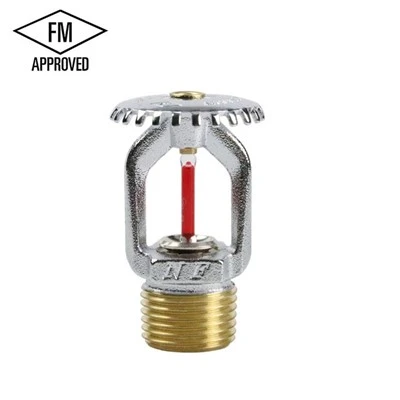
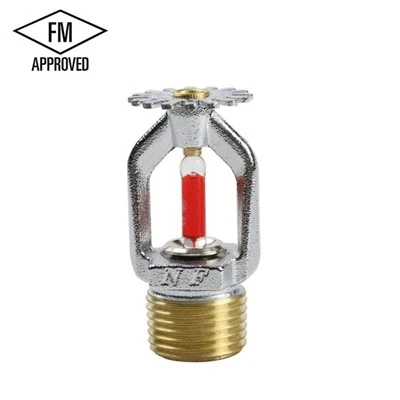
FM Approved fire sprinklers are commonly specified for projects where FM requirements apply. Certification provides important information about the conditions under which a sprinkler has been tested and approved.
However, certification requirements vary between projects and markets. Buyers should confirm the required approval, sprinkler type, K-factor, temperature rating, orientation, and installation requirements before placing an order.
Automation Is Changing Warehouse Fire Protection
Automated warehouses introduce additional design considerations. Conveyors, automated storage systems, mechanical equipment, cable trays, and other structures can affect sprinkler discharge and heat collection.
These elements may create obstructions or change the way water reaches the protected area. Therefore, fire protection design needs to consider the actual warehouse layout rather than treating the ceiling as an isolated protection zone.
Coordination between the warehouse layout and fire protection system is becoming increasingly important as automation expands.
What Should Buyers Consider in 2026?
When selecting fire sprinklers for a warehouse project, buyers should provide sufficient technical information rather than selecting a sprinkler based only on price or appearance.
Important factors include:
Storage height and building height
Commodity classification
Storage arrangement
Sprinkler K-factor
Response type
Temperature rating
Installation orientation
Required certification or approval
Water supply and system design requirements
These details help ensure that the selected sprinkler is suitable for the intended application.
Conclusion
Warehouse fire protection is evolving alongside changes in storage technology and building design. Higher storage density, automation, and increasingly complex layouts are placing greater demands on sprinkler system design.
In 2026, the focus is moving toward application-specific protection, reliable fire sprinklers, and appropriate certification. For warehouse projects, selecting the right sprinkler requires consideration of the complete fire protection design rather than relying on a single product specification.