The rapid growth of global logistics, e-commerce, and industrial warehousing is driving strong demand for advanced fire sprinkler systems in 2026. As modern warehouses become larger, taller, and more automated, fire protection engineers are adopting new sprinkler technologies designed specifically for high-ceiling storage facilities and complex logistics environments.
Industry analysts report that warehouse construction continues expanding worldwide, particularly in North America, Southeast Asia, the Middle East, and Europe. Rising online shopping activity, cold chain logistics development, and manufacturing growth are increasing investment in large distribution centers and automated storage facilities.
At the same time, fire protection requirements are becoming more demanding. Traditional sprinkler systems used in low-rise commercial buildings are often insufficient for today's high-bay warehouses, where storage heights can exceed 15 meters and commodity fire loads are significantly higher.
High-Bay Warehouses Create New Fire Protection Challenges
Modern logistics facilities are designed to maximize storage density and operational efficiency. Many warehouses now feature:
Automated storage and retrieval systems (ASRS)
Narrow aisle racking
High-density pallet storage
Plastic packaging materials
Tall ceiling structures
Robotic handling equipment
While these technologies improve productivity, they also increase fire risks and complicate sprinkler system design.
Fire spreads more rapidly in densely packed storage environments, especially where combustible packaging and plastic commodities are involved. High ceilings may also delay sprinkler activation because heat and smoke take longer to reach ceiling-mounted sprinklers.
As a result, warehouse operators and fire protection engineers are increasingly turning to advanced suppression technologies such as ESFR and CMSA sprinkler systems.
ESFR Sprinklers Continue Gaining Popularity
ESFR (Early Suppression Fast Response) sprinklers remain one of the fastest-growing segments in industrial fire protection.
Unlike conventional control-mode sprinklers, ESFR systems are designed to suppress fires quickly before they grow large enough to spread throughout storage racks.
Key advantages include:
Faster activation time
High water discharge density
Reduced need for in-rack sprinklers
Improved warehouse layout flexibility
Strong performance for plastic commodity storage
Industry experts report that ESFR sprinklers are now widely used in:
E-commerce fulfillment centers
Distribution warehouses
Manufacturing plants
Cold storage facilities
High-piled storage buildings
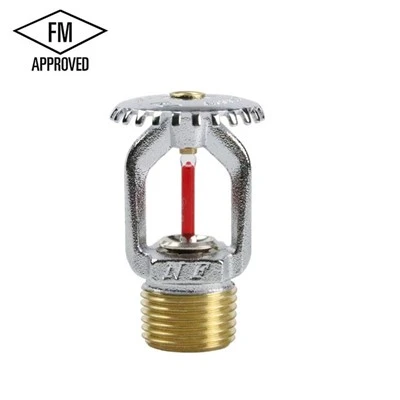
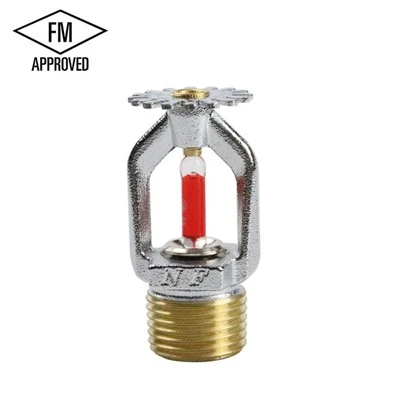
FM Approved ESFR sprinklers with larger K-factors such as K16.8, K22.4, and K25.2 are becoming increasingly common in large logistics projects.
Cold Storage Industry Expands Fire Protection Demand
The growth of refrigerated logistics and frozen food distribution is also supporting demand for specialized sprinkler systems.
Cold storage warehouses operate in freezing environments where traditional wet sprinkler systems may fail due to frozen pipes or blocked sprinkler discharge.
To address these challenges, engineers are increasingly using:
Dry ESFR sprinklers
Dry pendent sprinklers
Corrosion-resistant sprinkler systems
Low-temperature fire protection solutions
The pharmaceutical cold chain sector is another major driver of demand, particularly for vaccine storage and temperature-sensitive medical products.
Insurance and Safety Regulations Becoming Stricter
Insurance companies and international fire safety organizations are placing greater emphasis on warehouse fire protection following several large industrial fires in recent years.
Modern warehouses often contain:
Combustible insulation materials
Lithium battery-powered equipment
Plastic packaging
Automated machinery
High-value inventory
These factors increase both fire risk and potential financial losses.
As a result, many industrial projects now require:
FM Approved sprinklers
NFPA 13 compliant systems
High-capacity water supply systems
Early suppression technologies
Enhanced fire monitoring solutions
Warehouse operators are investing more heavily in certified fire protection equipment to reduce insurance risks and improve operational safety.
Smart Fire Protection Technology Continues Developing
Digital technology is also transforming the fire protection industry.
Manufacturers are developing intelligent fire protection systems featuring:
Remote monitoring
Real-time pressure tracking
Smart alarm integration
IoT-based system diagnostics
Predictive maintenance technology
These innovations help facility managers identify system issues earlier and improve long-term maintenance efficiency.
Smart warehouse fire protection systems are expected to become increasingly common in automated logistics facilities over the next several years.
Sustainability Influences Fire Protection Design
Sustainability goals are affecting warehouse construction and fire protection engineering.
Many companies are designing energy-efficient warehouses with:
Solar panel systems
Sustainable insulation materials
Automated climate control
Reduced water consumption systems
Fire protection manufacturers are responding by developing:
Water-efficient sprinklers
Corrosion-resistant materials
Longer-life system components
Optimized hydraulic designs
The integration of fire safety and energy efficiency is becoming a key trend in modern warehouse infrastructure.
Regional Market Trends
North America
Large e-commerce distribution centers continue driving demand for ESFR and FM Approved sprinkler systems.
Europe
Strict fire safety regulations and automated warehouse development are increasing investment in advanced suppression technologies.
Middle East
Rapid logistics hub expansion is creating strong growth in industrial fire protection markets.
Asia-Pacific
Manufacturing growth and cold chain logistics expansion are supporting strong demand for warehouse sprinkler systems.
Future Outlook for Warehouse Fire Protection
Industry experts expect continued growth in advanced sprinkler technologies as warehouse infrastructure expands globally.
Future market trends may include:
Larger ESFR sprinkler systems
Improved dry sprinkler technology
AI-integrated fire monitoring
Enhanced suppression performance
More sustainable fire protection solutions
As warehouses become taller, denser, and more automated, reliable fire sprinkler systems will remain essential for protecting personnel, inventory, and infrastructure.
Conclusion
The global warehouse construction boom is accelerating demand for advanced fire sprinkler systems designed for modern logistics and industrial storage environments.
From ESFR sprinklers and dry sprinkler systems to smart fire monitoring technologies, the fire protection industry continues evolving to meet the challenges of high-bay warehouses, automated storage facilities, and refrigerated logistics centers.
As fire safety regulations become stricter and warehouse investments continue growing worldwide, advanced sprinkler technology will play a critical role in the future of industrial fire protection.