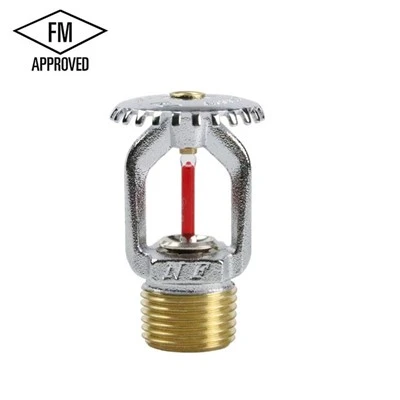
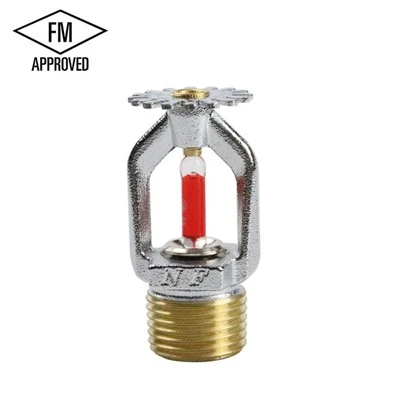
Production certification for sprinkler heads in automatic sprinkler systems requires passing eight stringent tests, including sealing integrity, flow characteristics, and dynamic thermal testing, to ensure reliable operation during critical moments. Routine maintenance mandates sampling inspections every five years, with corroded or damaged sprinkler heads requiring immediate replacement-GB 5135.1 and NFPA 25 standards establish a comprehensive safety defense from production to deployment.
Core Testing Standards
GB 5135.1-2019 Automatic Sprinkler Systems - Part 1: Sprinkler Heads
GB 5135.9-2018 Automatic Sprinkler Systems - Part 9: Early Suppression Fast Response (ESFR) Sprinkler Heads
NFPA 25 Standard for Inspection, Testing, and Maintenance of Fire Protection Systems (Internationally Recognized Maintenance Standard)
Among these, GB 5135.1-2019 is the foundational and mandatory national standard, specifying all technical requirements and testing methods for new sprinkler heads.
Production and Certification Testing
This serves as a rigorous "health check" for sprinklers prior to market release, encompassing numerous stringent procedures, primarily including:
Appearance and Dimensional Inspection
Inspection Items: Thread quality, clarity of markings (model, specification, production year, manufacturer, etc.), overall structure, presence of defects.
Importance: Ensures proper installation and information traceability.
Sealing Performance Test
Purpose: Verify the sprinkler maintains a tight seal without leakage under specified operating pressure.
Method: Install the sprinkler in a test pipeline, apply specified pressure (e.g., 3.0 MPa) for a defined duration (e.g., 3 minutes), and observe for leakage.
Requirement: Absolutely no leakage permitted.
Flow Characteristic Test
Purpose: Determine the flow coefficient (K-factor) of the sprinkler head to ensure its discharge volume meets design standards.
Significance: The K-factor forms the basis for fire protection hydraulic calculations and directly impacts fire suppression effectiveness.
Water Distribution Test
Purpose: Verify whether the water discharged from the sprinkler head uniformly and effectively covers the protected area.
Method: Spray water onto an array of collection boxes at a specified installation height and pressure, measuring the water distribution in each box.
Requirements: Water distribution must be uniformly diversified, with spray density in critical areas (e.g., most unfavorable point) meeting standards.
Static Operating Temperature Test
Purpose: Verify the accuracy of the sprinkler's nominal operating temperature.
Method: Place the sprinkler in a liquid bath with uniform heating rate and record the temperature at which it activates (glass bulb bursts or fusible element melts).
Requirements: The operating temperature must fall within the tolerance range of the nominal operating temperature (e.g., for a nominal 68°C sprinkler, the operating temperature should be within 68±X°C).
Dynamic Heat Test
Purpose: Simulate real fire conditions to test the sprinkler's Response Time Index (RTI) and thermal sensitivity.
Method: Expose the sprinkler to a hot air stream of specified temperature and velocity in a wind tunnel, measuring the time from heating initiation to activation.
RTI Value: A key parameter measuring sprinkler response speed. Rapid response sprinklers (RTI ≤ 50 (m·s)⁰.⁵) activate significantly faster than standard response sprinklers (RTI ≥ 80 (m·s)⁰.⁵).
Functional Testing/Fire Suppression Testing
Purpose: To evaluate the actual activation and fire suppression capabilities of sprinklers in simulated real-fire scenarios.
Method: Within a standard combustion chamber, ignite specific fuels (e.g., wood, plastic) to trigger automatic sprinkler activation under fire heat exposure. Observe their fire containment and suppression effectiveness.