Large commercial developments, including shopping malls, office complexes, hotels, and mixed-use buildings, require careful fire safety planning. Their size, occupancy levels, building layouts, and different functional areas create specific challenges for fire protection.
Fire safety should be considered from the early planning and design stages rather than treated as a separate requirement after construction begins.
1. Assessing Building Layout and Fire Risks
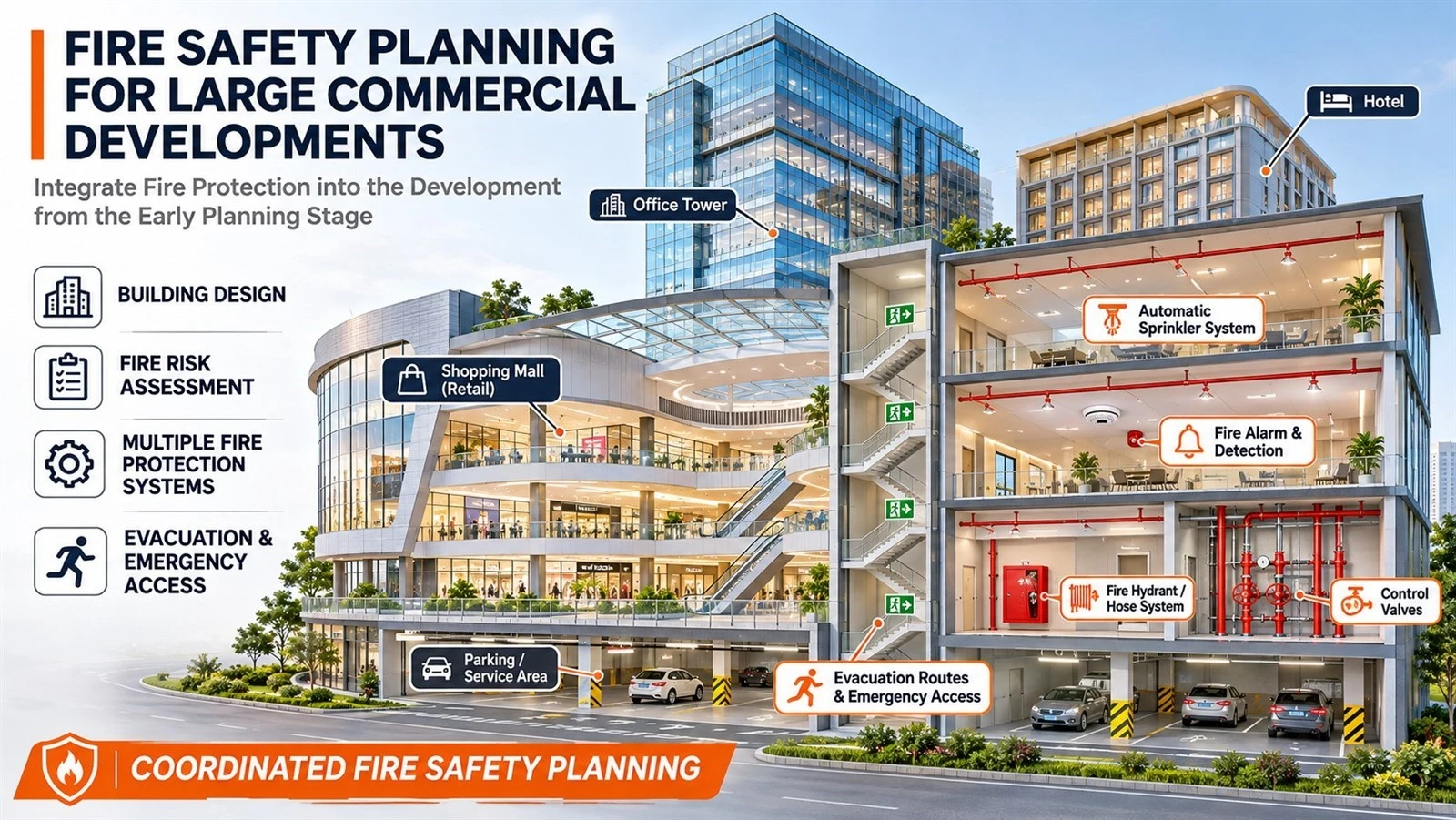
The first step is to identify the fire risks associated with different areas of a development. Retail spaces, restaurants, parking areas, storage rooms, and office floors may have different fire hazards and protection requirements.
Building height, floor area, ceiling structures, occupancy, and evacuation routes should also be considered when developing the fire protection plan.
2. Selecting Suitable Fire Protection Systems
A large commercial building may require several fire protection systems working together. Depending on the building design and applicable regulations, these may include:
Automatic sprinkler systems: Provide automatic fire control in protected areas.
Fire hydrant and hose systems: Support firefighting operations.
Fire monitors: Provide water or foam discharge for designated areas where appropriate.
Fire alarm and detection systems: Help identify fire conditions and initiate alerts.
Control valves and accessories: Support system operation, isolation, and maintenance.
Equipment selection should follow the approved fire protection design and relevant local standards.
3. Considering Equipment Specifications
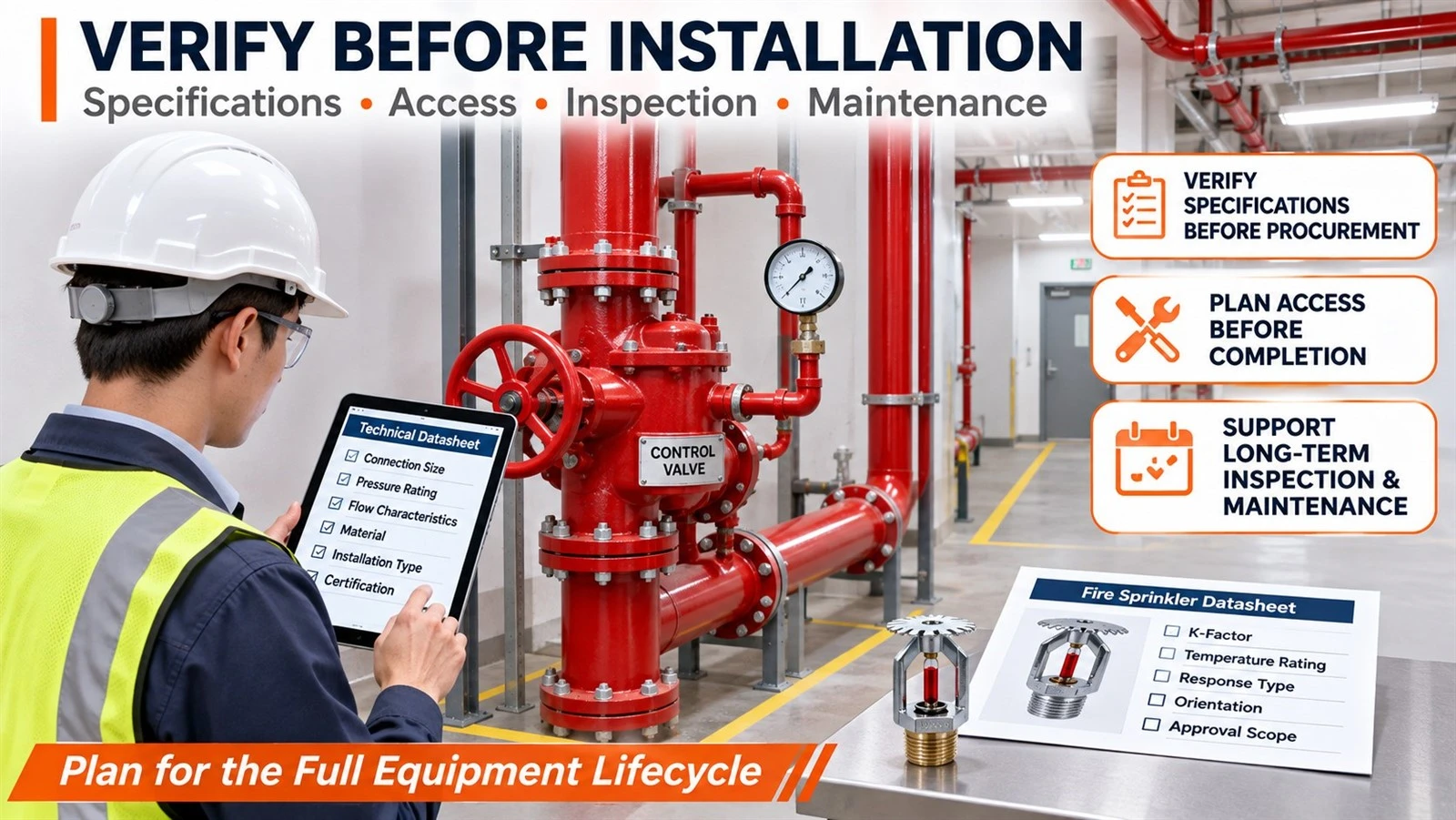
Selecting equipment based only on appearance or price can lead to specification mismatches. Project teams should verify key parameters such as connection size, pressure rating, flow characteristics, installation type, materials, and required certifications.
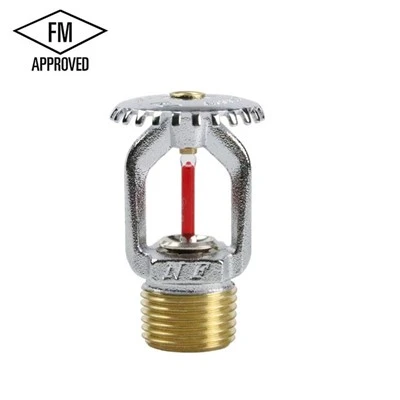
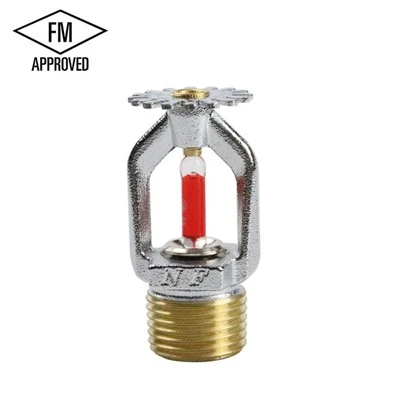
For sprinkler products, important details include K-factor, temperature rating, response type, orientation, and approval scope. These specifications should be checked against the project requirements before procurement.
4. Planning for Inspection and Maintenance
Fire protection planning should also consider long-term operation. Equipment access, valve locations, inspection arrangements, replacement requirements, and maintenance procedures should be addressed before the building is completed.
Clear equipment documentation and accurate product identification can make future inspection and maintenance more efficient.
Conclusion
Effective fire safety planning for large commercial developments requires coordination between building design, fire protection systems, equipment selection, and ongoing maintenance. Early consideration of these factors helps project teams establish a more suitable and manageable fire protection arrangement.
For equipment suppliers and project buyers, clear technical specifications and compliance with project requirements are essential parts of the procurement process.