Fire sprinklers are designed to respond to heat rather than smoke. This operating principle helps the sprinkler system react directly to a developing fire while reducing unnecessary activation caused by smoke, dust, or other airborne particles.
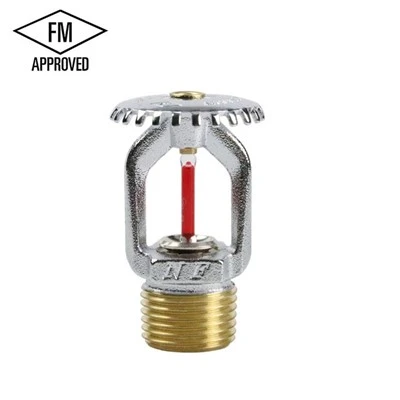
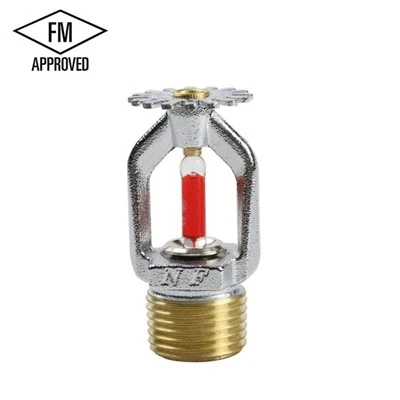
A typical glass bulb fire sprinkler contains a heat-sensitive liquid inside a sealed glass bulb. Under normal conditions, the bulb remains intact and keeps the sprinkler closed. When a fire develops, rising temperatures around the sprinkler heat the glass bulb. Once the surrounding temperature reaches the sprinkler's rated activation temperature, the liquid expands and causes the bulb to break. The sprinkler then opens and allows water to discharge through the deflector.
The temperature rating is an important part of sprinkler selection. Common ratings include 57°C, 68°C, 79°C, and 93°C, depending on the sprinkler design and application. The appropriate temperature rating should be selected according to the expected ambient temperature and project requirements.
Heat activation also provides an important advantage over smoke detection. Smoke can travel throughout a building before the fire reaches the area where a sprinkler is installed. If sprinklers were designed to activate based on smoke, they could discharge water unnecessarily in situations where there is smoke but insufficient heat to indicate a fire at the sprinkler location.
This is also why fire sprinklers and smoke detectors have different roles. Smoke detectors are intended to provide early warning, while sprinklers are designed to control or suppress a fire when sufficient heat reaches the sprinkler.
Understanding the relationship between heat sensitivity, glass bulb temperature rating, and sprinkler activation is important when selecting fire sprinklers for commercial, industrial, warehouse, and other fire protection applications.