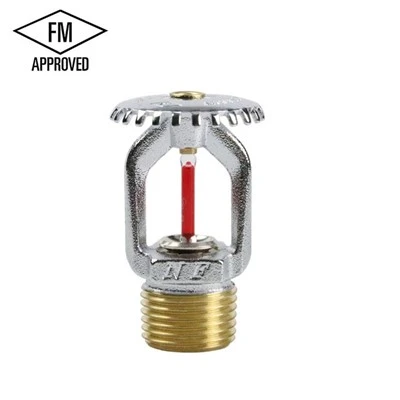
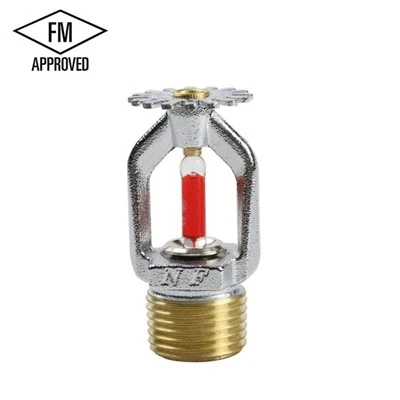
When selecting fire sprinkler heads, one of the most common questions is the difference between standard response and quick response sprinklers. While both are designed to control or suppress fires, their performance characteristics and applications vary significantly.
Understanding these differences is essential for engineers, contractors, and buyers to ensure proper system design and effective fire protection.


What Is a Standard Response Sprinkler?
Standard response sprinklers are designed with a relatively higher thermal inertia, meaning they activate at a slower rate when exposed to heat.
Key characteristics include:
Activation at higher accumulated heat levels
Suitable for general industrial applications
Stable performance in environments with fluctuating temperatures
They are commonly used in warehouses, factories, and storage facilities where fire growth may be slower and system robustness is required.
What Is a Quick Response Sprinkler?
Quick response sprinklers are engineered to activate faster due to their more sensitive thermal elements, typically using smaller glass bulbs.
Main features include:
Faster activation time
Improved life safety performance
Better control of fire in early stages
They are widely used in commercial buildings, offices, hotels, and residential environments where occupant safety is a priority.
Key Differences That Impact Performance
1. Activation Time
Quick response sprinklers operate significantly faster than standard response types, helping to control fires before they grow.
2. Thermal Sensitivity
The difference in glass bulb size (such as 3mm vs 5mm) directly affects how quickly the sprinkler reacts to heat.
3. Application Scenarios
Standard response → industrial & storage
Quick response → commercial & life safety
4. Fire Control Efficiency
Faster activation generally leads to lower ceiling temperatures and reduced fire spread.
Why This Choice Matters in System Design
Selecting the wrong type of sprinkler can lead to:
Delayed fire suppression
Increased property damage
Non-compliance with project specifications
Engineers must consider building type, fire load, and safety requirements when choosing between standard and quick response sprinklers.
Industry Trend: Faster Response for Better Safety
Modern fire protection design increasingly favors quick response sprinklers, especially in environments where human safety is critical.
However, standard response sprinklers still play an important role in industrial applications where durability and system stability are key considerations.
Conclusion
Both standard response and quick response sprinklers serve essential roles in fire protection systems. The key is selecting the right type based on application needs, safety priorities, and system design requirements.
A well-informed choice ensures better fire control, improved safety, and compliance with international standards.
About NONFIR
NONFIR specializes in FM approved fire sprinkler heads, offering both standard response and quick response models designed for reliable fire protection performance.
🌐 Website: www.nonfirsprinkler.com
📧 Email: info@nfsprinkler.com
📱 WhatsApp: +86 18160950625