Sprinklers have been around for well over a century, yet the myths about them come mostly from movies. These beliefs cause real problems. They make owners nervous about installing sprinklers, and they make some people neglect the ones they already have. Here are seven myths that keep coming back, and the facts behind each.
Myth 1: When one sprinkler goes off, they all go off
Fact: Each sprinkler works on its own. A sprinkler opens only when the heat around that one head reaches its rated temperature, so only the heads nearest the fire discharge water. In most fires where sprinklers operate, one or a few heads are enough to control the fire.
One honest note: in a large or fast-growing fire, such as one in high-piled storage, more heads will open. That is why sprinkler systems are designed for a set number of heads operating together, and why the right sprinkler type matters. Even then, the heads that open are the ones over and around the fire, not the whole building.
Myth 2: Smoke will set off the sprinklers
Fact: Sprinklers respond to heat, not smoke. Burnt toast, cigarette smoke or steam will not make a sprinkler open. A typical glass bulb sprinkler is rated at about 155 ℉ (68 ℃) or higher, so it needs real fire heat to operate. Smoke detectors and sprinklers do different jobs: detectors react to smoke, sprinklers react to heat.
Myth 3: Sprinkler water damage is worse than fire damage
Fact: A sprinkler typically discharges roughly 10 to 26 gallons of water per minute, and only from the heads that have opened. A fire department hose can deliver 100 gallons per minute or more, and firefighters often need it because the fire has already grown. A fire that sprinklers hold in check causes far less damage than one that burns until the fire brigade arrives.
Myth 4: Sprinklers go off by accident and cause floods
Fact: Accidental discharge is rare. When it does happen, the cause is usually physical damage, such as a forklift hitting a head, someone hanging items from a sprinkler or pipe, or a head that has been painted or corroded. Freezing in unheated areas can also split pipes. These problems are largely preventable with good housekeeping, guards where heads can be hit, and regular inspection.
Myth 5: Smoke alarms are enough
Fact: Smoke alarms and detection systems warn people, which is vital. But they cannot fight the fire. Sprinklers respond automatically, even when nobody is there, such as a warehouse at night. The best protection uses both: detection to alert people, sprinklers to control the fire.
Myth 6: A sprinkler system needs no maintenance once it is installed
Fact: A system that is neglected may not work when it is needed. Valves can be left closed, pumps can fail, heads can be damaged or painted, and pipes can corrode. Standards such as NFPA 25 set out regular inspection, testing and maintenance, and good records. A system that passed inspection in January is only proven for January. Keep checking it.
Myth 7: All sprinklers are the same, so any head will do
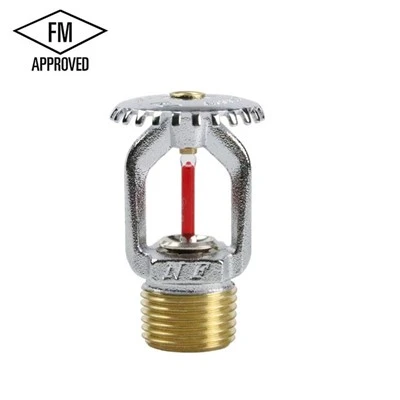
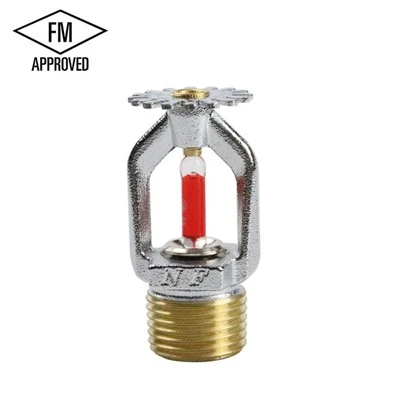
Fact: Sprinklers differ in orientation, K-factor, temperature rating, response speed, finish and the use they are designed for. A head that suits an office ceiling may be wrong for a warehouse rack, a hot plant room or a corrosive area. Replacing a head with a different type without checking the design can leave the area under-protected. For more, see our guides to choosing sprinkler heads, upright, pendent and sidewall sprinklers and ESFR and storage sprinklers.
What the myths have in common
Most of these myths picture the sprinkler as an overreaction: too much water, too sensitive, too extreme. In reality it is a precise device. Each head waits quietly until the heat around it says there is a fire, then puts water on the spot where it is needed.
Need help choosing sprinklers?
NONFIR offers FM approved upright, pendent and horizontal sidewall sprinklers in standard response and quick response types. See the sprinkler range from NONFIR, or send us your project details and we will help you choose.
Frequently asked questions
Do sprinklers activate in a kitchen when cooking? Normal cooking, steam and smoke will not activate a sprinkler. Only enough heat to reach the head's rating will.
How many sprinklers usually go off in a fire? In most fires where sprinklers operate, only one or a few. Large or fast-growing fires, such as in high-piled storage, can open more.
How often should sprinklers be inspected? Inspection and testing schedules are set out in standards such as NFPA 25 and by local codes. Ask your fire protection contractor for a plan for your building.