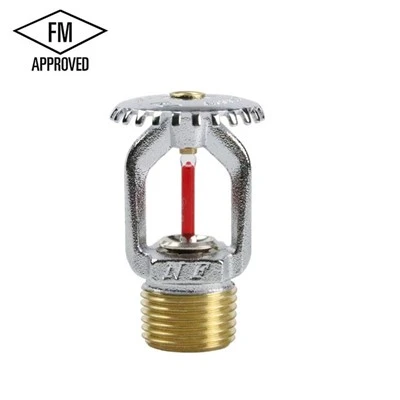
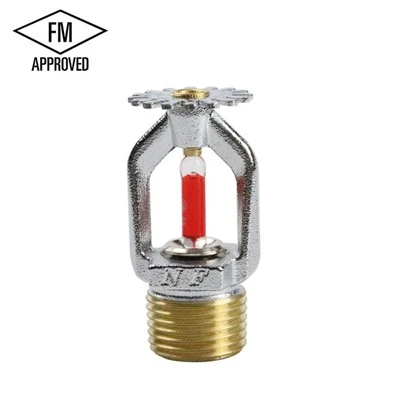
When selecting standard response fire sprinklers, comprehensive consideration must be given to factors such as classification, application locations, and installation requirements. Key selection criteria are outlined below:
Core Classification and Selection Basis
Standard response sprinklers have a response time index (RTI) range of 80<RTI≤350 (m·s)⁰·⁵
Selection should incorporate the following factors:
Protected Area
Standard Coverage Sprinklers: Flow coefficient K ≥ 80, maximum protected area per sprinkler ≤ 20 m² (upright/pendant type) or ≤ 18 m² (wall-mounted type)
Extended Coverage Sprinklers: Flow coefficient K ≥ 80, maximum protected area per sprinkler can be extended to 36 m²
Installation Method and Location Compatibility
Locations without ceilings: When distribution pipes are below beams, use upright sprinklers
Locations with ceilings: Preferably use pendent-type or ceiling-mounted sprinklers
Horizontal ceiling light/medium hazard Class I locations: Such as residences, offices, etc., may use wall-mounted sprinklers
Obstruction Considerations: If ceilings are free of beams, ductwork, or other obstructions, extended coverage sprinklers may be selected.
Temperature and Special Requirements
Nominal activation temperature should exceed maximum ambient temperature by 30°C.
Sprinklers in impact-prone areas require protective covers.
Concealed sprinklers are restricted to light hazard and medium hazard Class I locations.