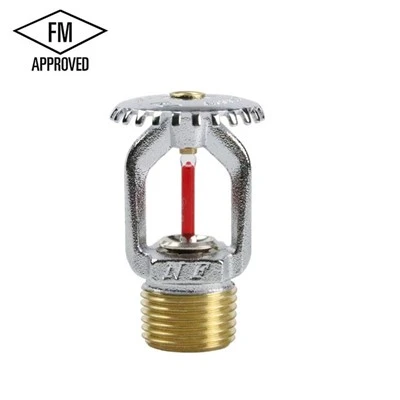
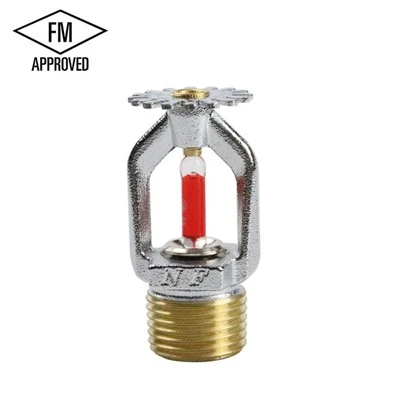
Selecting the right fire sprinkler is critical for ensuring system performance and meeting project requirements. Many engineers and buyers ask: "How do I choose the right FM approved sprinkler head?" The answer depends on application type, hazard level, and system design.
This guide explains the key factors to consider when selecting an FM approved sprinkler.


What Is an FM Approved Sprinkler?
An FM approved sprinkler is certified by FM Global, ensuring it meets strict fire performance and reliability standards.
FM approved sprinklers are commonly required in:
Warehouses
Industrial plants
Logistics centers
High-value storage facilities
They are especially important in projects where insurance compliance is mandatory.
Key Factors When Choosing an FM Sprinkler
1. Hazard Classification
The first step is understanding the fire risk level of your project:
Light Hazard: Offices, hotels, residential
Ordinary Hazard: Commercial and light industrial
Extra Hazard: High-risk industrial environments
Different hazard levels require different sprinkler performance characteristics.
2. Sprinkler Type
Choosing the correct installation type is essential:
Upright Sprinkler – Installed above pipes, ideal for open industrial spaces
Pendent Sprinkler – Installed below ceilings, widely used in buildings
Sidewall Sprinkler – Suitable for corridors and limited ceiling access
Each type affects water distribution and coverage.
3. K-Factor (Flow Coefficient)
The K-factor determines how much water the sprinkler discharges:
Common values: K5.6, K8.0, K11.2
Higher K-factor = higher water flow
Large warehouses and high-pile storage areas often require higher K-factor sprinklers.
4. Response Type
FM approved sprinklers are classified into:
Quick Response (QR)
Faster activation
Better for life safety
Typically uses 3mm glass bulb
Standard Response (SR)
Slower activation
Focus on property protection
Usually 5mm glass bulb
Selecting the right response type depends on occupancy and safety requirements.
5. Temperature Rating
Sprinklers activate at specific temperatures, such as:
68°C (155°F) – most common
79°C / 93°C – higher temperature environments
Choosing the correct rating prevents false activation while ensuring timely response.
6. Installation Environment
Environmental conditions also play a major role:
Corrosive environments require coated or stainless steel sprinklers
Freezing conditions may require dry systems
High ceilings may need special design (e.g., ESFR)
FM vs Underwriters Laboratories: Which Should You Choose?
Both FM and UL certifications are widely recognized, but:
FM focuses on performance under real fire scenarios and insurance requirements
UL focuses on general safety and compliance
Many international projects require both certifications for approval.
Common Mistakes When Selecting Sprinklers
Avoid these common errors:
Choosing based on price instead of certification
Ignoring hazard classification
Using incorrect K-factor
Not considering installation environment
Mixing incompatible sprinkler types
These mistakes can lead to system failure or non-compliance.
Industry Trend: Demand for High-Performance Sprinklers
With the growth of e-commerce and logistics, there is increasing demand for:
High K-factor sprinklers
ESFR systems for warehouses
FM approved quick response models
Advanced corrosion-resistant designs
FM approved products are becoming the standard choice for modern fire protection projects.
Conclusion
Choosing the right FM approved sprinkler head requires careful consideration of hazard level, sprinkler type, K-factor, and environmental conditions. A properly selected sprinkler ensures system efficiency, compliance, and reliable fire protection.
For engineers and buyers, understanding these factors is essential to making the right decision and ensuring long-term safety.
NONFIR Fire Protection
🌐 Website: www.nonfirsprinkler.com
📧 Email: info@nfsprinkler.com
📱 WhatsApp: +86 18160950625
We supply FM approved fire sprinkler heads including K5.6, quick response, and standard response models. Contact us for technical support and project solutions.