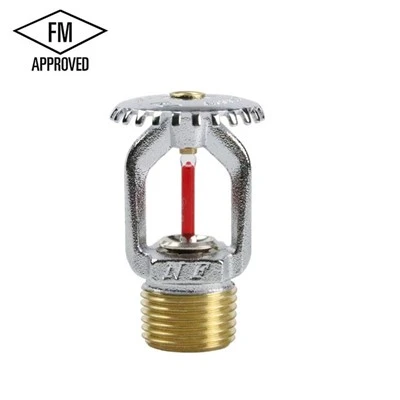
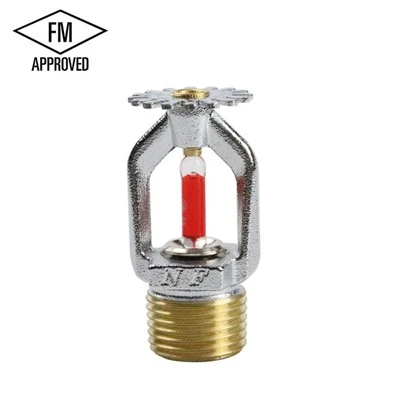
Fire sprinkler systems play a critical role in modern fire protection design, helping control or suppress fires before they spread. Among the many sprinkler types used in commercial, industrial, and residential buildings, sidewall sprinklers and pendent sprinklers are two of the most common options. Although both are designed to provide effective fire suppression, their installation methods, spray patterns, applications, and system design considerations are significantly different.
Understanding the differences between sidewall and pendent sprinklers is essential for selecting the right fire protection solution for specific building layouts and hazards.

What Is a Pendent Sprinkler?
A pendent sprinkler is the most widely used automatic fire sprinkler type in wet pipe fire protection systems. It is installed on the ceiling with the deflector facing downward, allowing water to distribute evenly beneath the sprinkler during activation.
Pendent sprinklers are commonly used in:
Commercial buildings
Shopping centers
Warehouses
Hotels
Office buildings
Industrial facilities
Residential apartments
These sprinklers are designed to provide broad and symmetrical water coverage, making them ideal for large open spaces.
Main Features of Pendent Sprinklers
Ceiling-mounted installation
Downward water discharge
Wide coverage area
Available in standard response and quick response models
Suitable for wet, dry, pre-action, and deluge systems
Pendent sprinklers are also available in decorative versions such as concealed sprinklers for modern architectural applications.
What Is a Sidewall Sprinkler?
A sidewall sprinkler is installed along a wall instead of directly on the ceiling. It discharges water outward in a half-circle spray pattern designed to protect areas beneath and in front of the sprinkler.
Sidewall sprinklers are commonly installed in:
Hotel rooms
Corridors
Small offices
Residential rooms
Hospitals
Dormitories
Areas with limited ceiling access
These sprinklers are particularly useful when ceiling piping installation is difficult or when aesthetic considerations are important.
Main Features of Sidewall Sprinklers
Wall-mounted installation
Horizontal water discharge
Semi-circular spray pattern
Reduced ceiling piping requirements
Suitable for narrow or small spaces
Many modern buildings prefer sidewall sprinklers because they can provide effective fire protection while minimizing visible ceiling piping.

Key Differences Between Sidewall and Pendent Sprinklers
1. Installation Position
The biggest difference is the mounting location.
Pendent Sprinklers
Installed on ceilings
Connected to overhead piping
Deflector faces downward
Sidewall Sprinklers
Installed on walls near the ceiling
Connected through side piping
Deflector directs water outward
Pendent sprinklers are generally preferred in open ceiling layouts, while sidewall sprinklers are often selected for finished architectural spaces.
2. Water Distribution Pattern
Spray pattern directly affects fire suppression efficiency.
Pendent Sprinkler Spray Pattern
Pendent sprinklers discharge water downward in a circular pattern that provides even floor coverage.
Advantages:
Better protection for large open areas
More uniform water distribution
Higher design flexibility for large systems
Sidewall Sprinkler Spray Pattern
Sidewall sprinklers project water outward and downward in a half-circle pattern.
Advantages:
Efficient for narrow rooms and corridors
Reduced sprinkler quantity in small spaces
Easier integration into finished interiors
Because sidewall sprinklers spray from one direction, their spacing and positioning must be carefully designed.
3. Application Areas
Different environments require different sprinkler configurations.
Typical Applications for Pendent Sprinklers
Warehouses
Retail stores
Factories
Underground parking areas
Large commercial spaces
Industrial plants
Typical Applications for Sidewall Sprinklers
Hotels
Residential apartments
Hospital patient rooms
Corridors
Offices
Renovation projects
The choice often depends on room size, ceiling structure, and architectural limitations.
4. Ceiling Design Compatibility
Modern architecture increasingly influences sprinkler selection.
Pendent Sprinklers
Pendent models work best with:
Suspended ceilings
Open ceilings
Industrial ceilings
Standard commercial layouts
Sidewall Sprinklers
Sidewall models are ideal for:
Decorative ceilings
Historic building renovations
Limited ceiling access
Minimalist interior designs
In high-end architectural projects, concealed sidewall sprinklers are becoming increasingly popular.
5. Installation Cost and Complexity
System installation costs may vary depending on building design.
Pendent Sprinklers
Advantages:
Standardized installation
Easier hydraulic balancing
Lower unit cost in large systems
Disadvantages:
Requires ceiling piping network
More visible piping in exposed ceilings
Sidewall Sprinklers
Advantages:
Reduced ceiling piping
Easier installation in finished spaces
Simplified retrofit projects
Disadvantages:
More precise spacing requirements
Limited coverage area
For renovation projects, sidewall sprinklers may significantly reduce construction complexity.
6. Hydraulic Design Considerations
Hydraulic calculations are important in sprinkler system performance.
Pendent Sprinklers
Typically provide:
More balanced water distribution
Greater spacing flexibility
Better suitability for high-demand systems
Sidewall Sprinklers
Require:
Accurate positioning
Controlled spacing distances
Careful obstruction analysis
Improper placement of sidewall sprinklers can reduce coverage effectiveness.
7. Aesthetic Appearance
Building owners increasingly consider sprinkler appearance.
Pendent Sprinklers
More visible on ceilings
Industrial appearance in exposed installations
Concealed versions available
Sidewall Sprinklers
Less intrusive visually
Cleaner ceiling appearance
Popular in hotels and luxury buildings
Architects often select sidewall sprinklers to maintain ceiling aesthetics.
Which Sprinkler Type Is Better?
There is no universal answer because both sprinkler types serve different purposes.
Choose Pendent Sprinklers When:
Protecting large open spaces
Installing systems in warehouses or industrial buildings
Maximum coverage efficiency is required
Ceiling piping is acceptable
Choose Sidewall Sprinklers When:
Ceiling access is limited
Appearance is important
Protecting small rooms or corridors
Renovating existing buildings
Proper sprinkler selection should always follow local fire codes, hydraulic calculations, and professional fire protection engineering standards.
Importance of Certified Fire Sprinklers
Whether selecting sidewall or pendent sprinklers, certification and product quality are critical for fire safety system reliability.
FM Approved and internationally certified sprinklers help ensure:
Stable activation performance
Reliable water distribution
Compliance with international fire standards
Long-term durability and corrosion resistance
In commercial and industrial projects, certified fire sprinklers are increasingly required by consultants, contractors, and insurance companies.
Future Trends in Fire Sprinkler Design
As buildings become more complex, sprinkler technology continues to evolve.
Current industry trends include:
Concealed architectural sprinklers
Quick response fire sprinklers
Corrosion-resistant coatings
High K-factor sprinklers
Smart fire protection integration
Specialized data center fire protection systems
Both sidewall and pendent sprinklers will continue to play essential roles in modern fire protection engineering.
Conclusion
Sidewall and pendent sprinklers are both important components of automatic fire sprinkler systems, but they are designed for different installation environments and protection objectives.
Pendent sprinklers provide efficient and reliable protection for large open spaces, while sidewall sprinklers offer flexibility and improved aesthetics for smaller or architecturally sensitive areas.
Choosing the correct sprinkler type improves fire safety performance, system efficiency, installation practicality, and long-term building protection. For modern fire protection projects, understanding these key differences is essential for achieving reliable and code-compliant fire suppression solutions.