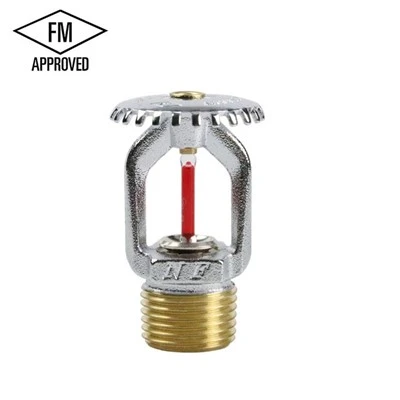
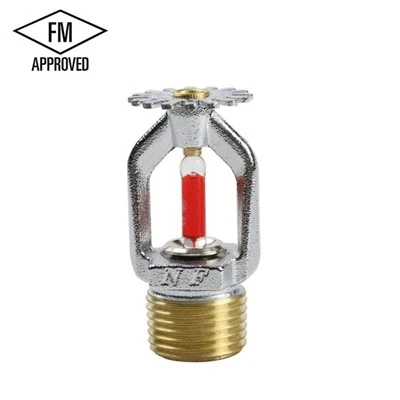
A fire sprinkler system is a fixed fire protection facility comprising sprinkler heads, piping, and alarm devices. Based on control methods, it can be categorized into manually controlled and automatically controlled types. It possesses automatic fire detection and water spray extinguishing capabilities, primarily classified into wet, dry, and deluge systems. The system activates water discharge when a heat-sensitive glass bulb ruptures. Sprinkler activation temperatures are color-coded (e.g., red for 68°C, yellow for 79°C, green for 93°C-commonly used in kitchens, blue for 141°C, etc.).
Each sprinkler covers approximately 12m² and activates linked equipment like fire pumps and water alarms. Thermosensitive glass bulbs carry a risk of accidental breakage from external contact. Wet systems maintain pressurized water in pipes and are suitable for freeze-free environments; dry systems fill pipes with compressed gas for low- or high-temperature locations; deluge systems deploy open sprinklers for full-area water discharge upon fire signal activation. The system includes components such as fire water tanks, control valve assemblies, and flow indicators. Sprinkler heads are categorized by installation method into pendent, upright, and sidewall types, and must comply with technical specifications such as maintaining a 7.5-15 cm clearance between the deflector and floor slab (not exceeding 30 cm for non-combustible floor/roof slabs with a fire resistance rating ≥0.50 hours). According to the Design Code for Simple Automatic Sprinkler Systems, this system may be deployed in locations such as postal collection points.